Qobuz vs Tidal: Which is the best Hi-Res streaming platform?
Complete guide to Qobuz vs Tidal 2026: which platform offers the best Hi-Res quality, price and experience. Includes a comparison of family plans and how to save by sharing.


Summarise with AI
Choosing between Qobuz and Tidal has become the favourite dilemma for audiophiles seeking superior sound quality without compromise. Both platforms promise high-resolution audio, extensive catalogues, and premium experiences, but the differences between them go beyond technical specifications.
No platform dominates in all aspects. Qobuz stands out for its sound purism and catalogue specialising in jazz and classical, while Tidal offers a greater variety of content, better discovery algorithms, and a more complete experience for the average user. The battle between Qobuz vs Tidal has no absolute winner; the best choice depends on each listener's profile.
Quick Comparison Table: Qobuz vs Tidal
| Feature | Qobuz | Tidal |
|---|---|---|
| Maximum Quality | FLAC 24-bit/192kHz | FLAC 24-bit/192kHz |
| Catalogue | +90 million songs | +110 million songs |
| Standard Price | €12.99/month | €10.99/month |
| Hi-Res Plan | Included in base plan | Included in HiFi Plus |
| Family Plan | €21.99/month (Studio) - €29.16/month (Sublime) | €16.99/month (HiFi Family) |
| Price per person (Family) | Studio: €3.67/month - Sublime: €4.86/month | €2.83/month |
| Download Store | Yes | No |
| Exclusive Content | Jazz/Classical editorial | Concerts/Documentaries |
| Algorithms | Basic | Advanced |
| DAC Compatibility | Excellent | Excellent |
| Roon Integration | Yes | Yes |
Audio Quality Comparison: Hi-Res and Lossless Formats
Audio quality is the main battleground where both platforms compete for the attention of the most demanding audiophiles. The technical decisions of each service directly affect the listening experience.
Qobuz's Approach: Pure FLAC Without Compromise
Since its founding, Qobuz has opted for the FLAC format without any additional processing. This purist philosophy means that users receive exactly what the mastering studio delivered, without lossy compression or intermediate proprietary encoding. The high-resolution catalogue reaches up to 24 bits and 192 kHz in thousands of albums, especially in genres like jazz, classical, and progressive rock.
Advantages of Qobuz's approach:
- Universal compatibility with any DAC that supports FLAC
- No need for special decoders or additional licenses
- Completely open and transparent format
- Ideal for high-end audio equipment
Disadvantages:
- High data consumption: one hour at 24/192 can exceed 2 GB
- Less practical for mobile streaming with limited data
- Requires more storage space for offline downloads
Tidal and the Transition from MQA to FLAC
Tidal spent years betting on MQA, a format that promised Hi-Res quality in more compact files through a system of progressive "unfolding". The reality was controversial: MQA required certified hardware to fully exploit its potential, and many audiophiles questioned its real advantages over standard FLAC.
Tidal completed its transition to lossless FLAC, abandoning MQA as the main format. It now offers lossless quality up to 24 bits and 192 kHz similar to Qobuz, although the catalogue at maximum resolutions varies by record label.
Advantages of Tidal's current approach:
- Native FLAC without the need for special hardware
- Better compatibility with modern DACs
- Lower data consumption than Qobuz at high resolutions
- Completed transition from the controversial MQA
Is There an Audible Difference Between Both Platforms?
In purely technical terms, both platforms offer similar specifications at their maximum levels. The real difference lies in:
- Hi-Res Catalogue: Qobuz has a higher percentage of its library available at 24/96 or higher
- Processing: Qobuz does not apply normalisation or additional processing by default
- Metadata: Qobuz tends to maintain more detailed information about mastering and origin
For most listeners with mid-range equipment, the difference will be imperceptible. With high-end systems (DACs over €500, dedicated amplifiers, studio speakers), some audiophiles report a preference for Qobuz's presentation, especially in acoustic genres.
Music Catalogue and Content Discovery
Having millions of songs available means little if you can't find music that truly interests you. Here the strategies of each platform diverge significantly.
Catalogue Size and Regional Availability
Tidal:
- More than 110 million songs
- Greater presence in urban and mainstream genres
- Major artist releases often arrive first
- Better coverage in English-speaking markets
Qobuz:
- More than 90 million songs
- Specialisation in jazz, classical, and niche genres
- Especially extensive French catalogue
- Greater depth in independent European labels
Recommendation and Discovery Algorithms
Tidal has invested heavily in its discovery algorithms. Personalised mixes are frequently updated and take into account not only what is listened to, but when and how. If a user tends to explore new genres on weekends, the system detects it and adjusts its suggestions.
Highlighted discovery features in Tidal:
- My Mix: Personalised lists updated weekly
- Tidal Rising: Emerging artists programme
- Contextual suggestions (time of day, activity)
- Advanced algorithmic radio
Qobuz adopts a more conservative approach. Its recommendations work, but do not reach the level of personalisation of Tidal or Spotify. The French platform seems to trust more that its users know what they are looking for and prefer to browse on their own.
For listeners who enjoy being surprised by algorithmic discoveries, Tidal has a clear advantage. Those who prefer total control over their experience and distrust filter bubbles will find Qobuz's approach more respectful.
Editorial Content and Exclusives
Qobuz stands out for its quality editorial content. Articles about artists, album reviews, and historical context are written by real music critics, not automatically generated. For genres like jazz or classical, this editorial depth makes a difference: it's possible to read about the original recording of a Miles Davis album while listening.
Qobuz editorial content:
- Album reviews by experts
- Historical context articles
- Interviews with artists
- Guides by musical genres
- Information about mastering and production
Tidal counters with exclusives from mainstream artists and audiovisual content. Live concerts, documentaries, and exclusive studio sessions add significant value. Its connection with hip-hop and R&B artists remains notable.
Tidal exclusive content:
- Streaming and on-demand concerts
- Music documentaries
- Exclusive studio sessions
- High-quality music videos
- Behind-the-scenes content
Subscription Plans and Pricing: Which Offers Better Value for Money?
The monthly price is only part of the equation. What really matters is what you get for that money and how it fits with your consumption habits.
Price Comparison by Plan
Qobuz:
- Studio Plan: €12.99/month (includes Hi-Res up to 24/192)
- Annual Studio Plan: €129.99/year (savings of ~17%)
- Studio Family Plan: €21.99/month (up to 6 profiles) - €3.67 per person
- Sublime Plan: €14.99/month (Studio + store discounts)
- Sublime Family Plan: €29.16/month (up to 6 profiles) - €4.86 per person
- Student Discount: 50% off
Tidal:
- Individual Plan: €10.99/month (standard quality)
- HiFi Plus Plan: €19.99/month (includes Hi-Res)
- HiFi Family Plan: €16.99/month (up to 6 profiles) - €2.83 per person
- Student Discount: 50% off
Analysis: Qobuz includes Hi-Res access in its base plan, while Tidal reserves it for the higher level. For a single user seeking maximum quality, Qobuz is more economical (€12.99 vs €19.99).
However, in family plans, Tidal offers the best price per person: €2.83/month compared to Qobuz's €3.67-€4.86/month. If you share the subscription with 5 more people, Tidal is notably cheaper while maintaining full Hi-Res access.
Qobuz Download Store: A Unique Added Value
Qobuz has a card that Tidal cannot match: its download store. Users can purchase albums in high-resolution FLAC format and own them permanently, independent of the subscription.
Advantages of the Qobuz store:
- Permanent ownership of music
- 20-60% discounts for subscribers
- Formats from CD Quality to 24/192
- No DRM, downloadable files
- Ideal for building a personal library
Typical prices:
- Album in CD Quality (16/44.1): €7-12
- Album in Hi-Res (24/96): €12-18
- Album in maximum Hi-Res (24/192): €15-25
For digital collectors who want to build a personal library, this is invaluable. Favourite albums can be purchased for ownership, while streaming covers discovery and casual listening.
Tidal does not offer a purchase option: its entire model is pure streaming. For some users, this simplifies the experience; for others, it represents a significant limitation.
Save Even More by Sharing Your Subscription with Sharingful
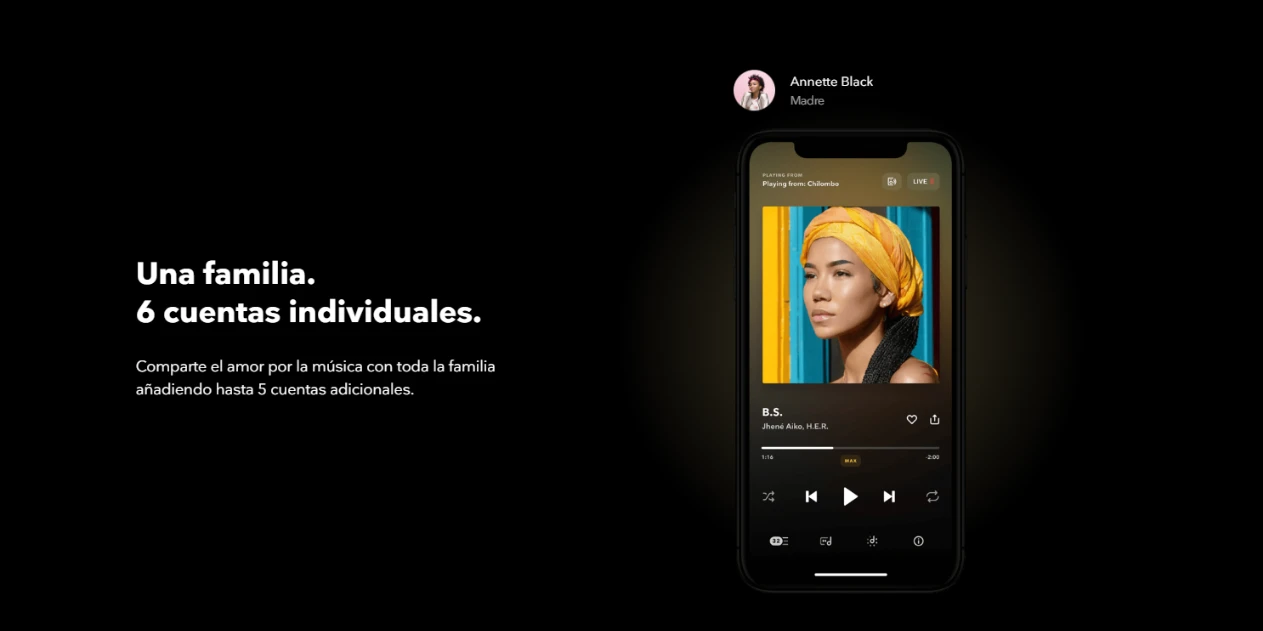
The family plans of Qobuz and Tidal allow up to 6 users, which already represents significant savings per person. However, if you don't have 5 friends or family members interested in sharing, or simply prefer not to manage payments and renewals manually, there is a more practical solution.
How does Sharingful work?
Sharingful is a Spanish platform specialising in facilitating the legal sharing of digital subscriptions. Instead of having to find people on your own, manage payments manually, and coordinate with strangers, Sharingful:
- Connects users who want to share the same subscription
- Manages payments automatically and securely
- Facilitates communication between family members
- Automatically renews your access each month
- Protects your data under European GDPR regulations
Real savings by sharing with Sharingful:
If you decide to share Qobuz, you can access the Studio or Sublime plan for less than €5/month, saving up to 70% of the individual price while maintaining your own personalised profile with full access to Hi-Res 24/192 quality.
For those who prefer to share Tidal HiFi Family, the savings are equally significant: Hi-Res quality from €2.83/month with an independent profile, your own playlists and favourites, and automatic payment management without complications.
Advantages of using Sharingful:
- Spanish platform with 4.9/5 on Trustpilot
- More than 50,000 active users
- Automatic payment and renewal management
- Support in Spanish 7 days a week
- 100% legal using official family plans
- Cancel anytime without penalties
Is it legal to share subscriptions?
Yes, it is completely legal. Both Qobuz and Tidal offer official family plans specifically designed to be shared among multiple users. Sharingful simply facilitates that people who do not know each other can take advantage of these legal plans safely and organised.
Each member gets:
- Their own personalised profile
- Full access to all Hi-Res features
- Independent playlists and favourites
- Private listening history
- Personalised recommendations
In addition to Qobuz and Tidal, on Sharingful you can also share Spotify, Netflix, Disney+, HBO Max, YouTube Premium, Apple Music, Microsoft 365, Canva Pro, Adobe Creative Cloud, and more than 30 digital platforms.
User Interface and Multiplatform Experience
An app can ruin the best music library in the world. The daily experience matters as much as the technical specifications.
App Design and Usability
Tidal:
- Modern and visually attractive interface
- Intuitive navigation even for new users
- Fast and effective search
- Seamless integration of audio and video content
- Dark mode available on all platforms
- Consistent experience across devices
Qobuz:
- More functional than aesthetic design
- More pronounced learning curve
- Focus on metadata and technical quality
- Can be intimidating for casual users
- Detailed information about each track
- Less visually polished
For users who prioritise aesthetics and ease of use, Tidal wins comfortably. For those who value technical information and granular control, Qobuz offers more tools.
Device and Operating System Compatibility
Both platforms are available on:
- iOS (iPhone, iPad)
- Android (smartphones, tablets)
- Windows (desktop application)
- macOS (desktop application)
- Web browsers
Key differences:
- Tidal has better integration with Android Auto and CarPlay
- Qobuz offers more audio configuration options on desktop
- Tidal works better on smart TVs and consoles
- Qobuz has native applications for Linux (unofficial but functional)
Compatibility with Audio Hardware and External DACs
Tidal has worked extensively on compatibility with external hardware. The app automatically detects USB DACs on most systems and allows selecting exclusive output mode to avoid operating system resampling. On mobile devices, support for USB-C to DAC adapters generally works without problems.
Qobuz offers similar functionality, although historically it has required more manual configuration in certain scenarios. The desktop app allows granular control over the buffer and audio output, something advanced users appreciate but can confuse beginners.
Technical audio features:
- Exclusive mode (bit-perfect output)
- Automatic detection of USB DACs
- Support for WASAPI, ASIO, Core Audio
- Playback buffer adjustment
- Bypass of operating system mixer
Both platforms support Chromecast, AirPlay 2, and direct connection to network speakers. The practical difference is minimal for most home setups.
Integration with Roon, BluOS, and Other Ecosystems
For users with multiroom systems or advanced music management software, integration with third parties is crucial. Roon, the gold standard for serious audiophiles, supports both Qobuz and Tidal natively. It is possible to mix the local library with the streaming catalogue and manage everything from a unified interface.
Compatible ecosystems:
- Roon (full integration)
- BluOS (Bluesound, NAD)
- Sonos
- Denon HEOS
- Yamaha MusicCast
- KEF Connect
- Cambridge Audio StreamMagic
The difference is in the details of implementation. Some users report that Qobuz better maintains metadata information and original resolution when played through Roon. Others prefer how Tidal manages playback queues in multiroom systems.
Offline Listening and Library Management
Downloads for Offline Listening
Qobuz:
- Download in maximum Hi-Res quality
- No limit on downloaded songs (limited by space)
- Organised file by album/artist
- Option to automatically download favourite albums
Tidal:
- Download up to Hi-Res quality (depending on plan)
- No limit on downloaded songs
- Automatic space management
- Smart download based on frequent listening
Both platforms allow easy management of which content is available offline, ideal for travel or areas with poor connection.
Personal Library Organisation
Qobuz offers:
- Unlimited playlists
- Favourites system by song, album, artist
- "To listen" album markers
- Limited import/export
Tidal offers:
- Unlimited playlists
- Playlist collaboration
- Collections system
- More fluid synchronisation between devices
Use Cases: Which is Better for You?
User Profiles and Recommendations
Choose Qobuz if:
- You are an audiophile with high-end equipment (DAC, amplifier, quality speakers)
- You mainly listen to jazz, classical, or acoustic music
- You value music ownership through downloads
- You are interested in editorial content and historical context
- You want individual Hi-Res access at the best price (€12.99/month)
- You use Roon or advanced management systems
- You prefer quality over the number of features
- You want to buy albums in Hi-Res to own them permanently
Choose Tidal if:
- You enjoy discovering new music through algorithms
- You listen to mainstream genres, hip-hop, R&B, pop
- You value audiovisual content (concerts, documentaries)
- You want a more polished user experience
- You share the subscription in a family plan
- You mainly use mobile apps
- You are interested in exclusives from popular artists
- You prefer a more complete ecosystem
Specific Scenarios
For the collector: Qobuz without a doubt. The download store allows building a permanent library in Hi-Res.
For the music explorer: Tidal. Its discovery algorithms are superior and the mainstream catalogue is broader.
For the purist audiophile: Qobuz. Pure FLAC without additional processing, better Hi-Res catalogue, detailed technical information.
For the casual premium user: Tidal. Better balance between quality, features, and ease of use.
For the jazz/classical fan: Qobuz. Superior catalogue, specialised editorial content, better selection of independent labels.
For the hip-hop/R&B fan: Tidal. Connections with artists, exclusive releases, better genre coverage.
Service Quality and Technical Support
Customer Service
Qobuz:
- Support by email and web form
- Response times: 24-48 hours
- Small but specialised team
- Better technical knowledge about audio
- Fewer resources for mass attention
Tidal:
- Support by email, chat, and social media
- Response times: 12-24 hours
- Larger team
- Faster responses but sometimes less technical
- Better support infrastructure
Stability and Reliability
Both platforms are generally stable, but there are differences:
Qobuz:
- Rare service outages
- Occasional issues with synchronisation between devices
- Less frequent updates
- Less investment in infrastructure
Tidal:
- More robust infrastructure
- More frequent updates
- Better performance during usage peaks
- Significant investment in servers and CDN
Final Verdict: Which to Choose in 2026?
After analysing both platforms in depth, the choice between Qobuz vs Tidal comes down to personal priorities rather than objective technical superiority.
Quick Decision Table
| Priority | Winner | Reason |
|---|---|---|
| Maximum audio quality | Tie | Both offer FLAC 24/192 |
| Hi-Res Catalogue | Qobuz | Higher percentage in high resolution |
| Music discovery | Tidal | Superior algorithms |
| Individual Hi-Res price | Qobuz | €12.99 vs Tidal's €19.99 |
| Price per person (Family) | Tidal | €2.83 vs Qobuz's €3.67-€4.86 |
| Exclusive content | Tidal | Videos, concerts, documentaries |
| User experience | Tidal | More polished interface |
| Music ownership | Qobuz | Download store |
| Jazz/Classical | Qobuz | Better catalogue and editorial |
| Hip-hop/R&B/Pop | Tidal | Better coverage and exclusives |
Final Recommendation
Qobuz is the best option if:
- You value the purity of the FLAC format without processing
- You want to own your music through downloads
- You mainly consume jazz, classical, or genres where editorial content adds value
- You prefer your money to reach artists more directly
- You have high-end audio equipment and want to make the most of it
- You seek the best price for individual Hi-Res access
Tidal is the best option if:
- You prioritise algorithmic discovery of new music
- You enjoy exclusive audiovisual content
- You frequently listen to urban or mainstream genres
- You prefer a more polished interface without the need for advanced configuration
- You value the complete experience over pure specifications
- You share a subscription in a family plan
Practical Advice
Both services offer free trial periods (usually 30 days). The best advice is to try both platforms with your own equipment, favourite genres, and real use cases before committing long-term.
Optimise the Cost of Your Hi-Res Subscription with Sharingful
Whether you choose Qobuz or Tidal, you don't have to pay the full price. Legally sharing official family plans allows you to maintain full access to all features while saving hundreds of euros a year.
More than 50,000 users are already optimising their spending on digital subscriptions with Sharingful, a Spanish platform with 4.9/5 on Trustpilot that facilitates sharing more than 30 premium services in a 100% legal and secure way. Automatic management, support in Spanish 7 days a week, and the peace of mind knowing that everything works under European regulations.